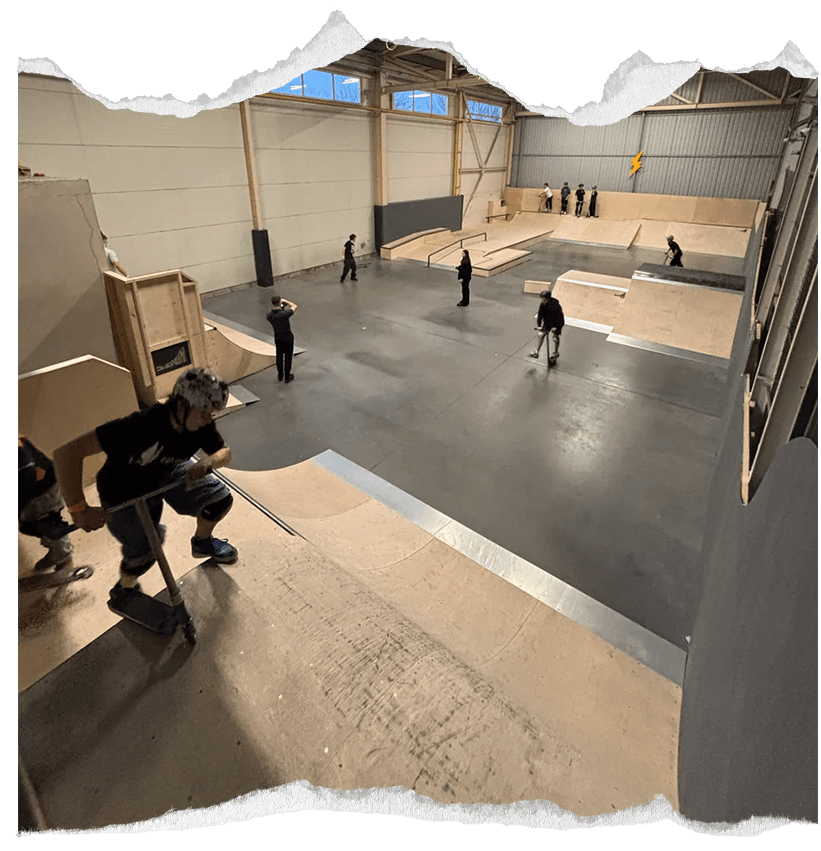
The best materials for building ramps – wood or concrete?
Building a ramp is an investment that must be durable and safe. The choice of materials is crucial – both for the ride quality and the longevity of the structure. At SZPLIN Ramps, we only use proven solutions, which is why we've prepared a brief comparison of wood and concrete in the context of building skate ramps and obstacles.
1. Wooden ramp – light, flexible and mobile
Wood is the most frequently chosen material in modular ramps .
Advantages:
- lightweight construction (easy transport and assembly),
- pleasant for the wheels – quiet and absorbing falls,
- the ability to transfer or modify the system,
- lower cost compared to concrete.
Defects:
- requires appropriate impregnation and protection against moisture,
- Intensive use may require replacement of some components after a few years.
At SZPLIN Ramps we use waterproof, anti-slip plywood, which ensures excellent durability and a safe grip even after rain.
2. Concrete ramp – durability for years
Concrete is the choice for large, stationary urban skateparks .
Advantages:
- very high durability,
- minimal need for maintenance,
- ideal for intensive use and heavy loads.
Defects:
- lack of mobility – the ramp is fixed,
- higher construction costs,
- more difficult repairs in case of damage.
Concrete skateparks are mainly chosen in public projects where maximum durability over many years is important.
3. What to choose – wood or concrete?
Wood is ideal for private mini ramps , gardens, or indoor arenas. It's cheaper and easier to customize. Concrete is an option for large urban skateparks , where durability and low maintenance are key.
4. SZPLIN Ramps – quality guarantee
Regardless of the material chosen, our ramps meet European safety standards. We use:
- galvanized steel,
- waterproof plywood,
- finishing elements for maximum durability and perfect flow.
Want to learn more about our structures? Check out our mini ramp offerings at the SZPLIN Ramps store .
